
Skip to content

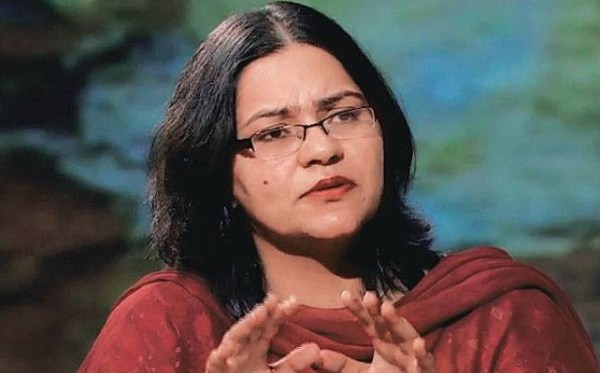
Mitu Khurana, pédiatre à New Delhi, parle d’«autodestruction»

May 30, 2013

Mitu Khurana, pédiatre à New Delhi, parle d’«autodestruction»

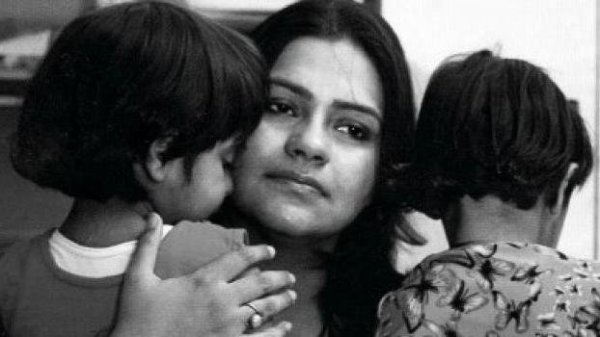
695362-mitu-khurana-jumelles

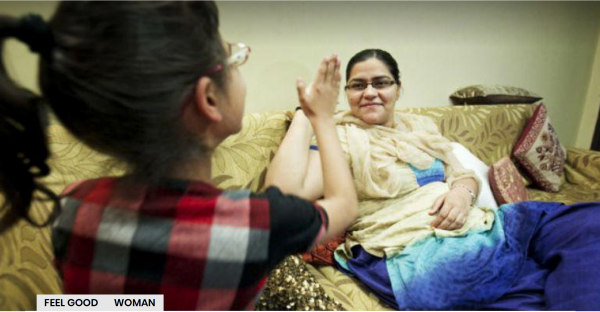
« Je me suis mariée en 2004 et je suis tombée enceinte l’année suivante. Quand mon mari et sa mère ont su que j’attendais des jumeaux, ils ont voulu me faire subir une échographie. Ils ne voulaient pas deux filles. Si c’était le cas, je devais me faire avorter. J’ai résisté. Je n’étais pas d’accord.

Ils m’ont piégée. Un soir, ils m’ont donné un gâteau à base d’oeufs, en sachant que j’étais allergique. J’ai fait une grosse réaction. Le lendemain matin, ils m’ont amenée dans un hôpital différent de celui que je fréquentais d’ordinaire. Le médecin m’a dit qu’il devait faire une échographie de mes reins. En réalité, il en a fait une des foetus. Puis, il a annoncé à ma belle-famille que j’attendais des filles.

Dès ma sortie de l’hôpital, mon mari et sa mère ont commencé à faire pression sur moi pour que je me fasse avorter. Ils ne me donnaient qu’une petite sucrerie pour souper. J’étais littéralement affamée. Habituellement, les femmes gagnent du poids pendant la grossesse. J’en perdais. Ils me faisaient nettoyer les planchers dans l’espoir que cela provoque une fausse couche. Ils refusaient de me parler pendant des heures. Toutes nos conversations se résumaient à des cris et des insultes.

Comme j’étais la seule bru de la maison, ils me disaient que si je ne leur donnais pas un fils, personne ne pourrait transmettre le nom de leur famille à la génération suivante. Ils se plaignaient aussi de la dot qu’ils auraient à payer au mariage de mes filles. J’ai enduré cela pendant un mois, puis je suis retournée chez mes parents. C’est toujours là que j’habite, avec mes deux filles. »

Full Story

It’s a girl!

March 29, 2013

It’s a girl!

A summary of the female infanticide forum.

There was a grave below her feet and a smile on her face. Her weapons were relatively harmless: her hands, at times, but usually a dishtowel that had dried plates just minutes before. She folds it, let’s the child breath in the cloth, and then carries it to its waiting grave. She has done this eight times, but all for one reason: because her baby has been a girl.

On March 13, It’s A Girl shocked its Trinity Western audience with the reality of female infanticide and foeticide. Hosted by TWU Students for Life and guest speaker Mark Warawa, the event raised awareness on the current 200 million girls missing worldwide due to the practice. Sex selection largely occurs for cultural and economic reasons; boys carry the family name and income, whereas girls are given away in marriage and cost the family expensive dowries.

The film focused on the two countries where gendercide is the most prevalent – India and China. One of the countries seems to be suffering from a lax justice system, whereas overtly strict laws pain the other. In India, the appropriate laws are in place: dowries are outlawed, sex determination tests are illegal, and civil rights are written in stone. However, the government is plagued with complacency as none of the laws are appropriately enforced.

We meet a character whose life, and children’s lives, are put in danger due to this apathy. After continually refusing a sex determination test of her twins, Mitu Khurana is poisoned by her mother-in-law and husband in order to be forcibly taken to a hospital. While there, a bribed doctor reveals that Khurana is carrying not only one but two girls. She stands courageous in the face of pressure to have an abortion; but her husband tries to kill her strength and her children by throwing her down the stairs.

Although she escaped that situation, she continues to hold onto it as it fuels her fight against female infanticide and foeticide. She has protested against the government and tried to talk with politicians, ministers, and the PM himself about this miscarriage of justice; their only response has been a frustrating silence.

Full Story

Mitu Khurana: “Meine Töchter sollen leben”

March 15, 2013

Mitu Khurana: “Meine Töchter sollen leben”

mitu-khurana


Indien ist für Mädchen das gefährlichste Land der Welt. Sie werden ermordet, vergewaltigt – oder gar nicht erst geboren. Mitu Khurana stellt sich dagegen: Als erste Frau in Indien hat sie ihren Mann wegen versuchten Mordes angezeigt. Er wollte sie zwingen, ihre Zwillinge abzutreiben – nur, weil sie Mädchen sind.

Als Mitu Khurana in der 16. Woche ihrer Schwangerschaft war, ließ ihr Mann ihr einen Kuchen mit Eiern backen. Er wusste, dass sie allergisch gegen Eier ist, er wollte, dass sie davon krank wird. Mitu aß den Kuchen. Es ging ihr schlecht. Sie verlangte nach ihren Medikamenten. Die Familie gab sie ihr nicht. Sie kam in ein Krankenhaus. Ihr Mann überzeugte den Arzt, einen Ultraschall vorzunehmen. Das hatten er und Mitus Schwiegermutter seit Wochen gewollt: dass sie eine Ultraschalluntersuchung macht, um das Geschlecht ihres Kindes zu bestimmen. Mitu hatte sich stets geweigert, aber jetzt wurde sie mit Medikamenten ruhiggestellt. Statt der vermeintlichen Nierenuntersuchung wegen der Allergie wurde das Geschlecht der Kinder bestimmt. Zwei Mädchen. Als man es ihr sagte, wusste sie: Man wird sie zur Abtreibung zwingen.

Inmitten des asiatischen Wirtschaftsbooms geht es für Mädchen in Indien ums Überleben. Seit fast zwanzig Jahren gibt es dort Ultraschalluntersuchungen, seitdem können die Familien auch das Geschlecht des Kindes frühzeitig erfahren. Und deshalb wurden zwölf Millionen Mädchen – vor allem im reichen Süden und in den großen Städten, wo viele sich einen Ultraschall leisten können – nicht geboren, weil ihre Familien lieber einen Jungen wollten. Sie wurden abgetrieben, im Klinikmüll entsorgt. Nicht aus Not und Armut, sondern weil sie für ihre Familien vor allem eins bedeuteten: weniger Geld für ihre eigenen Wünsche – ein Apartment, ein neues Auto, eine schöne Reise.

Geschlechtsselektive Abtreibung ist verboten, trotzdem werben die vielen, vor allem privaten Abtreibungskliniken dafür: “Zahl jetzt 1.000 Rupien – und spare später 100.000.” Denn Mädchen brauchen bei ihrer Verheiratung eine Mitgift, und die Hochzeitsfeier, die die Familie der Braut ausrichten muss, kostet viel Geld. “Ein Mädchen großzuziehen ist wie Nachbars Garten zu wässern”, lautet ein indisches Sprichwort. Die UN haben Indien zum weltweit gefährlichsten Land für Mädchen erklärt. Denn es werden nicht nur Millionen weiblicher Föten abgetrieben. Jede Stunde wird eine Frau ermordet, weil die Familie ihres Mannes es nur auf ihre Mitgift abgesehen hat. In der modernen Hauptstadt Delhi wird alle 18 Stunden eine Frau vergewaltigt. So wie am 16. Dezember eine 23-jährige Studentin in einem Bus von sechs Männern – auf so brutale Art, dass sie 13 Tage später starb.

Full Article

Justice for the daughters

March 15, 2013

Justice for the daughters

mitu_girls

Mitu Khurana is a doctor who been fighting for years against female foeticide. She has been a victim of her parents-in-law who tried everything in their power to stop Mitu from giving birth to her twin girls. She has now become the woman who champions the cause of baby girls and an activist who leaves no stone unturned to create awareness on the problem of sex selection.

Roma Rajpal: How far along are you on your journey to getting justice for yourself and your daughters?

Mitu Khurana: We are safe and away from violence. Otherwise in the courts, it’s a long perhaps never ending battle. The accused are rich and powerful. They have the powers to influence the authorities. I am very very far away from attaining my goal.

Do you think the patriarchal mindset in India can be changed? If so how?

Any change, if it happens, can be through the youth, if they are sensitized by people who themselves are sensitive to such problems. Until then, perhaps only international pressure and intervention by UN to stop the gendercide can save us.

Your in-laws and your husband are well-educated people, yet they failed to discriminate and resorted to treating you like a bully. If this comes from educated people, how would the lower class ever be able to come to terms with the awareness that India needs?

The desire for a son is prevalent all over India. Some have the means to go for sex-selective abortion; others resort to abandoning, neglecting or killing their daughters.  Programs like “Satyamev Jayate” (a popular series on social issues) and the movie, “It’s a girl” can help a lot to spread awareness. Neighbourhood watch groups, training groups, NGOs which train people to become watch dogs can also help.

There are weak moments, when I feel it’s a losing battle, because the accused are powerful and the system doesn’t want women like me, who walk out and save their daughters. On the other hand it always favours people who are rich and powerful. It was the struggle against my husband which turned into a struggle against the whole system.

This woke me up. Things need to change at every level. It’s no longer a personal fight, because now I am fighting the system, which does not want daughters, which does not respect women, which does not think of providing justice because of patriarchal atitude and corruption.

Added to it was the company of good friends which taught me the problem is widespread. I was just one of the many women who were suffering. I could come out because my parents supported me, otherwise I would have continued to be a victim. Parents usually do not support daughters to move away from their husbands, despite of having been in grave danger.

Full Article

Neither Pro-Life Nor Pro-Choice Can Solve the Selective Abortion Crisis

March 8, 2013

Neither Pro-Life Nor Pro-Choice Can Solve the Selective Abortion Crisis

Image

The new documentary It’s a Girl highlights just how complicated the issue is.

In the United States, the discussion of sex selection and gendercide inevitably gets pulled into the gravitational pit that is the abortion debate. Gendercide is the name given to the targeted killing of people of one gender—often used especially to refer to the targeting of baby girls by cultures that want sons. Pro-life advocates have been eager to adopt this issue, seeing it as an instance in which advocating for girls and advocating against abortion go together—thereby, in theory, undermining the pro-choice argument that pro-lifers are motivated by sexism. Last year, the House considered, and failed to pass a ban on sex-selective abortions. Even its supporters said the bill was intended not so much to regulate abortions as to paint Democrats as hypocritical in their support for women’s rights.The new documentary It’s a Girl, which focuses on the gendercide of girls in India and China, also raises some uncomfortable issues for Democrats and pro-choice advocates.

One of the most inspiring figures in the film, for example, is Dr. Mitu Khurana, a woman who became pregnant with twins. Her husband and mother-in-law forced her to get an ultrasound to find out the gender of the children she was carrying, even though such ultrasounds are illegal in India. When they found the babies were girls, they tried to force her to get an abortion and physically abused her in the hopes that she would miscarry. She eventually escaped her home and bore her daughters. She has spent much of the time since attempting to prosecute the doctor who gave her the ultrasound. Authorities would not help, though. Instead, she has faced death threats and rape threats and been continually harassed.

Yet, in the U.S., feminists and pro-choice advocates tend to be very uncomfortable with the kind of ultrasound bans that Khurana is fighting to have enforced. In the west, ultrasound bans look like a restriction on women’s autonomy. But the argument that a woman should have the right to make her own medical choices with the help of her doctor becomes incoherent in a context where doctors are themselves an integral part of systemic violence against women.

If the documentary puts pressure on pro-choice arguments, it certainly does the same for the pro-life arguments as well. It’s a Girl opens with an interview with a poor Indian woman who killed eight of her infant daughters, not through abortion, but through suffocating them after they were born. This is not uncommon. Poor women in India don’t have access to ultrasounds or to abortions, for the most part. But they are desperate to avoid having daughters, not least because of the tradition of dowry, which requires expensive gifts to be given to a husband when a girl is married. Poor families cannot afford the dowries, and they cannot afford abortions. So they simply kill or abandon their female infants after birth.

Similarly, as author and activist Rita Banerji says, “Homes where there is tremendous violence inflicted on women are the same homes where violence is killing girls of five and under at an abnormal rate.” Sex-selective abortion, in other words, is only one small part of widespread social violence against, and contempt for, women and women’s lives. Focusing on abortion and fetuses ignores infanticide. It also ignores the murder of 100,000 grown women each year, who may be killed because they failed to give birth to sons, or because their husbands feel the dowry they received wasn’t large enough.

Full Story

Woman Saves Her Twins From India’s Feticide

February 12, 2013

Woman Saves Her Twins From India’s Feticide

dr-mitu-khurana-with-twin-girls-300x195

In February of 2005, Dr. Mitu Khurana discovered she was pregnant with twins. Immediately her mother-in-law demanded that she undergo tests to discover whether the babies were boys or girls. Mitu refused. She knew she would love her children no matter what sex they were. She also knew that if it was discovered that they were girls, her husband and in-laws would relentlessly pressure her to abort.
Even though having an ultrasound to discover the sex of the baby with the intent of aborting if it is a girl is illegal, the practice remains rampant in India. It is estimated that nearly 50,000 girls are aborted every month. It is difficult to know how many baby girls are also abandoned or murdered after they are born. As a result, Indian men now outnumber women by nearly 40 million!

Why in the world would a nation do such a thing to itself? The answer is money. Indian tradition demands that the parents of a daughter pay a huge dowry to get her married. Many families feel they cannot pay the steep price which is expected. Therefore, they abort their girl babies in hopes of a son.

Mitu Khurana was one woman who fought back. When she refused to submit to the testing to determine the gender of her babies, her family brought down such pressure upon her that it almost amounted to torture. They denied her food and water in their attempt to break down her will.

Finally one night her husband served her a cake made with eggs, to which she is extremely allergic. Her reaction was so severe that Mitu had to be rushed to the hospital. While there, her in-laws persuaded a doctor to test for the sex of the babies. To their great dismay, both were girls.

The pressure to abort her daughters became intense. If not both, then at least one had to go. Or, if not abortion, then she should give them away for adoption. When Mitu stood her ground, her husband demanded that she take a paternity test, refusing to believe that he could be the father of twin daughters. Finally, in a fit of rage, he through her out of the house and she returned to her parents.
In August of 2005, Mitu gave birth two months prematurely. In an attempt to save her marriage, she returned to her husband’s home. After four months of being ignored and disdained, she witnessed her mother-in-law push one of the babies down the stairs. In fear for their lives, she fled.

Full Story

The ‘genocide’ of India’s daughters

January 11, 2013

The ‘genocide’ of India’s daughters

We ask if the patriarchal mindset that runs across castes and class can be changed to prevent foeticide and infanticide.

Supreme Court judges in India have summoned the health secretaries in seven states over a worrying fall in the number of young girls in India.

They are demanding details about clinics flouting the Pre-Conception and Pre-Natal Diagnostic Techniques Act – to determine the sex of unborn babies – with potentially fatal consequences.

The judges are blaming what they call rampant foeticide and infanticide, and they say the mindset of parents and society need to change.

The UN children’s charity UNICEF says the culture of favouring males in India is costing the lives of millions of young girls.

The agency says more than 2,000 illegal abortions are being carried out every single day, and it is dramatically altering the balance of the population.

It warns: “Decades of sex determination tests and female foeticide that has acquired proportions are finally catching up with states in India. This is only the tip if the demographic and social problems confronting India in the coming years.”

Speaking in April 2011, Manmohan Singh, the Indian prime minister, called for a crusade against the widespread practice of foeticide and infanticide.

“The people [district medical officers] who are supposed to be enforcing the [Pre-Conception and Pre-Natal Diagnostic Techniques Act] they themselves have the same patriarchal mindset and they don’t feel that it’s wrong to kill a girl child in the desire for a boy, naturally they won’t go and prosecute anybody. Add to it corruption [within the medical profession].”

- Mitu Khurana, a pediatrician and a women’s rights activist

“The falling child sex ratio is an indictment of our social values. Our girls and women have done us proud in classrooms, in boardrooms and on the sports field. It is a national shame for us that despite this, female foeticide and infanticide continues.”

The 1991 Indian census showed there were 945 girls for every 1,000 boys, aged up to six. Ten years later, it dipped even further to just 914 girls for every 1,000 boys.

But that is just the average. The figures are far worse in some states.

The 2011 census found there were 830 girls for every 1,000 boys in the northern state of Haryana. It was 846 in neighbouring Punjab state. And in the national capital territory of Delhi the figure was 866.

Full Story

Follow

Get every new post delivered to your Inbox.

Join 84 other followers